Earth Day 2026: together we fight for the climate
What began in the 1970s as a national protest movement against the American fossil fuel industry later grew into a global moment of awareness and action: Earth Day. Under the theme “Our Power, Our Planet,” this year's call invites everyone to join forces in protecting a livable planet. But what does that collective responsibility look like in practice?
We spoke to three changemakers who are each contributing in their own way to the collective fight for a greener future: Daan Zieren and Cléo Dorel-Watson, youth representatives at the Jonge Klimaatbeweging (JKB), and Paulien Boone, founder of Buying Back the Planet.
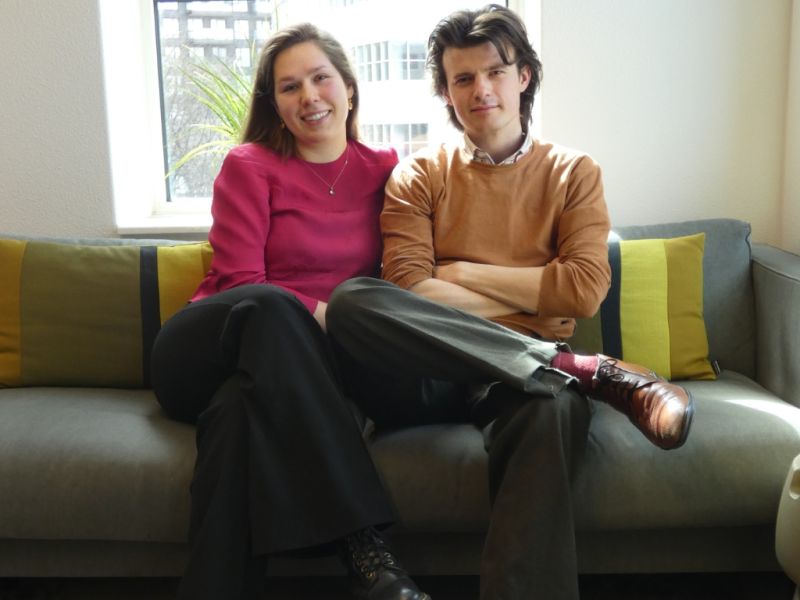
The Jonge Klimaatbeweging: “The climate crisis affects us all”
Daan is a political science graduate and has been living in The Hague for several years. Although he originally started as a volunteer at the JKB, he has been serving as the organization’s full-time chair for nearly a year. Cléo holds a bachelor’s degree in Global Sustainability Science and now works within the JKB’s international branch while pursuing her Advanced Master’s in International Relations and Diplomacy.
Together, they are part of a growing youth movement made up of 11 teams, 90 members, and 74 affiliated youth organizations. Remarkably, almost all members of the JKB are involved as volunteers. “On the one hand, that can be a barrier,” Cléo explains. “People often don’t take into account that these young people are balancing their commitment to the JKB with work and/or studies. At the same time, JKB members are very intrinsically motivated, which creates a strong sense of drive.”
“The climate crisis affects certain groups far more than others. The groups that feel the least impact are often the same groups that have access to certain resources and influential positions.”
For the JKB, representing young people is therefore inextricably linked to a sense of justice. As Daan explains: “Although young people will be disproportionately affected by the consequences of climate change and have a direct stake in the climate policies being shaped today, their perspectives are often not brought to the table.”
To structurally involve young people in key climate agreements, the Jonge Klimaatbeweging not only focuses on information days and training programs to mobilise youth, but is also active in national politics from The Hague, for example during the most recent Dutch parliamentary elections. As Daan emphasizes: “We want climate to rank higher on the agenda, but also for the debate around climate to become broader. It often revolves around CO₂ emissions, but climate is highly intersectional and connected to other issues. That’s something we want to highlight.”
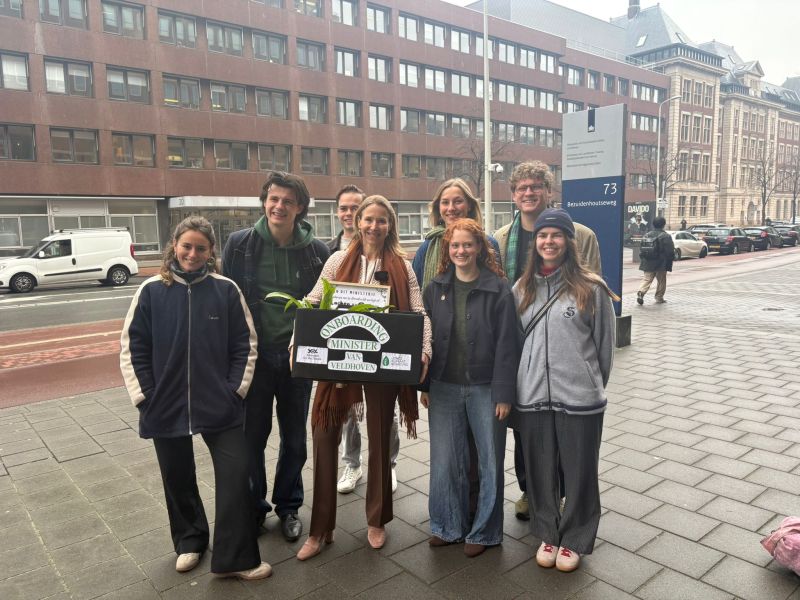
One of the themes that regularly returns in the work of the Jonge Klimaatbeweging is climate justice: not only for young people, but also for other groups that are most heavily affected by the consequences of a rapidly warming planet. Daan explains: “The climate crisis affects certain groups far more than others. The groups that experience the least impact are often the same groups that have access to certain resources and influential positions.”
“The JKB explicitly aims to make space for the stories and interests of marginalised groups whose voices are less often heard.”
Climate inequality also plays a role in the Netherlands, particularly in a highly segregated city like The Hague. Daan explains: “There are already many Dutch people living in energy poverty; they do not turn on their heating and live in poorly insulated houses. In that sense, the climate crisis can actually have an immediate impact on people in the short term.”
For the JKB, the collective importance of rapid climate action is therefore undeniable. As Daan states: “The fact that we need to act is ultimately not a political issue. Climate is politically neutral; it is neither left nor right. The climate crisis affects us all.”
“Climate is politically neutral; it is neither left nor right. The climate crisis affects us all.”
Although that necessity is clear to the JKB, it sometimes remains difficult in practice to convince others. Daan explains: “Invitations from companies to give young people a platform are often purely about their image. Within organizations and ministries, youth participation is also often seen as important, but in the end nothing is actually done with it.” This is also known as tokenism: involving underrepresented voices in decision-making purely to avoid criticism. Cléo puts it this way: “Tokenism is when people are happy to take a photo with you and can tick a box saying they’ve spoken to you, but don’t really want to hear the substance.”
On the other hand, the JKB can sometimes also use this form of superficial inclusion to their advantage. As Cléo says: “Sometimes you can use tokenism as a foot in the door to spaces where young people would otherwise not be able to enter.” Daan adds: “During the Dutch general election, we brought 80 pages of policy proposals to the ministry. They almost seemed surprised that we even came with concrete proposals, but over time that’s how you can gain more genuine influence.”
“Tokenism is when people are happy to take a photo with you and can tick a box saying they’ve spoken to you, but don’t really want to hear the substance.”
In addition to their efforts to influence the course of national climate policy, the JKB is also increasingly active on the global stage. For example, last year Cléo brought her background in international relations to the United Nations Climate Conference in Brazil (COP30). Such a climate conference is not just a negotiation, she explains. “The first time I went to a COP, I felt like a tourist; you really have to learn how to navigate UN language and how to negotiate.” Effective participation also requires extensive preparation: “Lobbying starts long before the COP; the COP itself is really the final push. If you only arrive at the COP with all your arguments, you’re actually already too late.”
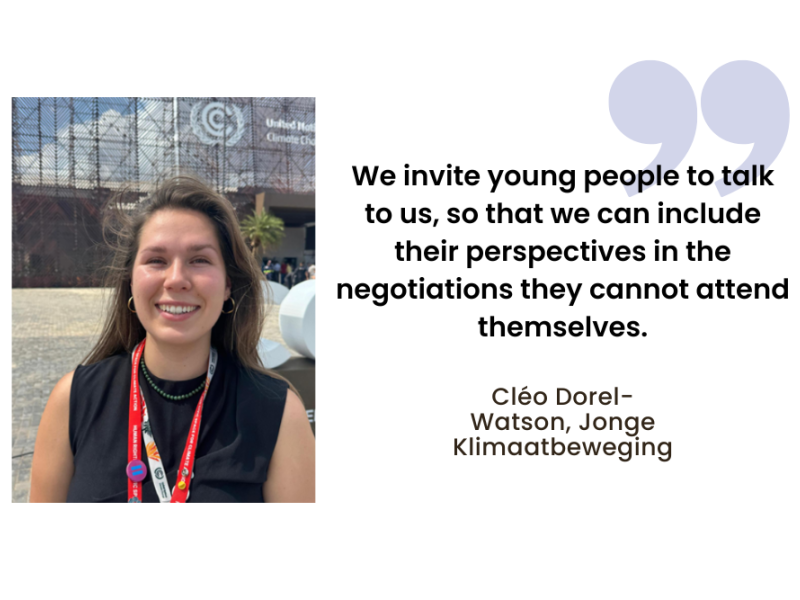
At the same time, the annual COPs also offer a unique opportunity for the JKB to ensure that young people’s voices are heard at the international level. Cléo explains: “It comes with a great sense of responsibility to be there, precisely because so few young people are involved. We invite young people to talk to us, so that we can include their perspectives in the negotiations they cannot attend themselves.”
The international team of the JKB is already gearing up for the next international climate meeting: the First Conference on Transitioning Away from Fossil Fuels (TAFF) in April. At this climate summit, co-hosted by the Netherlands and Colombia, the rapid and just phase-out of fossil fuels takes centre stage. Cléo explains how this conference can be seen as an unexpected outcome of the COP in Brazil: “It was very disappointing that fossil fuels were barely discussed during COP30. At the same time, the Brazilian delegation created space to announce the upcoming conference in Colombia. The JKB has already provided extensive input on the topics for discussion, and we now need to use this momentum to accelerate the energy transition.”
“Keep talking about it, keep your spirits up, and if you feel truly lost, join a movement, even if it's very local.”
From the Dutch House of Representatives to international conference halls: the young people of the Jonge Klimaatbeweging are active at the very heart of the political climate debate. At the same time, the organisation also brings that engagement back to the local level. Whether it’s a climate march on the Malieveld or green initiatives in the city, Daan and Cléo emphasize that opportunities to care for the planet together are everywhere, even close to home: “Know that a lot is happening and that there is reason for hope. Keep talking about it, keep your spirits up, and if you ever feel truly lost, join a movement, even if it's very local.”
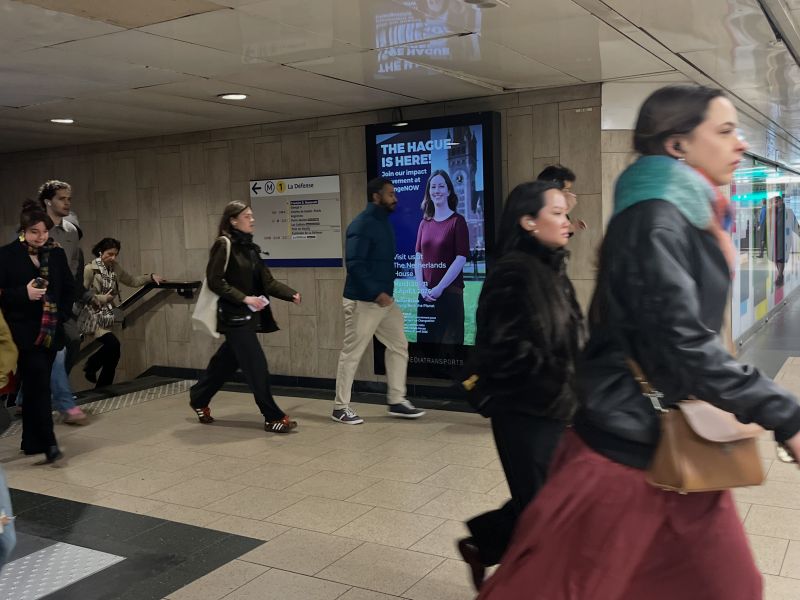
Paulien Boone of Buying Back the Planet: investing in the earth together
Paulien Boone has been a resident of The Hague for a long time and still values living in the city of peace and justice. She prefers to move between sectors and roles: over the course of her career, she transitioned from the Ministry of Foreign Affairs to fundraising and event organisation. Drawing on this diverse background, she initially founded her sole proprietorship, Acronyms: a freelance consultancy firm that brings international relations projects to life. However, her passion for sustainability recently resulted in a new addition to her portfolio: Buying Back the Planet, a European initiative dedicated to sustainable land use.
“I have been working on themes such as sustainability and climate for a long time, but we are now living in a time when it is very important to make these values concrete,” says Paulien. With Buying Back the Planet, she hopes to mobilize European citizens to pool funds for collective land stewardship. We enable citizens to manage land together and take good care of it. Collective ownership of land is a proven method for protecting it; it is literally investing in the Earth, but in a different way than most people usually think about investing.
“It is literally investing in the Earth, but in a different way than most people usually think about investing.”
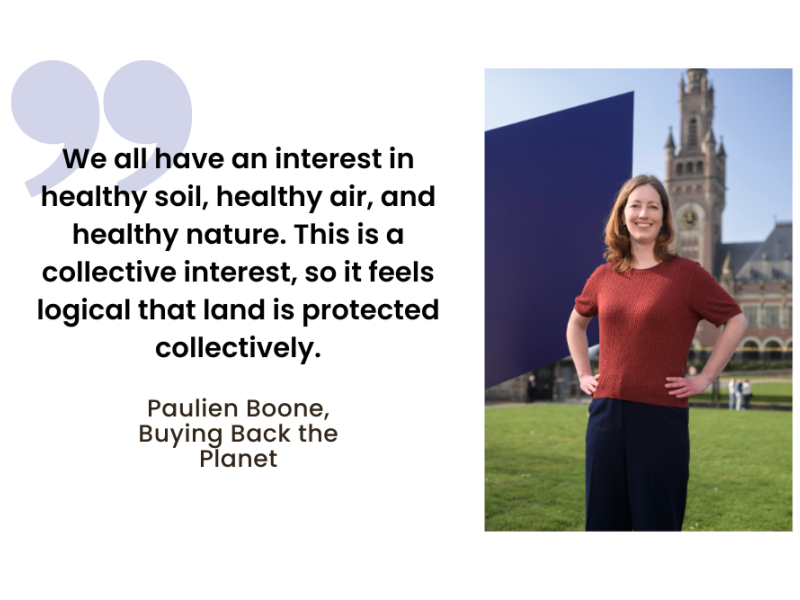
Paulien explains how European land still often ends up in the hands of private, profit-oriented parties. In Europe, the fastest-warming continent in the world, this can lead to short-term land use that contributes to environmental pollution, soil depletion, and climate change. “Land is currently often owned by companies, but we bring it into shared ownership. We all have an interest in healthy soil, healthy air, and healthy nature. This is a collective interest, so it feels logical that land is protected collectively.”
For Paulien, justice is an important feature of sustainable land management. Once a piece of land comes under collective stewardship, engaged citizens protect it together with local communities and partners, such as regenerative farmers. “What happens to the land is decided in collaboration with local partners; they know the environment best. Think of protecting the soil from pesticides and supporting local ecosystems.”
This joint restoration of European land and nature not only strengthens the position of local partners but also brings residents into closer contact with their living environment. Paulien explains: “Collaboration with local communities and partners gives this group more decision-making power. This strengthens the connection between people, nature, and the land they live on.”
“Climate action always sounds big and complicated, but it really comes down to how we treat the earth.”
To spread the mission of her initiative, Paulien also seeks connections with other like-minded and innovative organizations in The Hague. Last month, she attended ChangeNOW in Paris together with hundreds of other entrepreneurs, investors, and policymakers: a three-day conference where she was part of an ImpactCity delegation of impact-driven organizations from The Hague. According to her, politicians in The Hague also have a role to play in promoting sustainable land management: “Politics is often dominated by a short-term perspective, whereas we also need to keep the long term in mind. Nature restoration, climate adaptation, and strengthening the connection between people and their environment take time.”
Although Buying Back the Planet is still in the founding phase, Paulien notices that the concept of collective land ownership already resonates with people: “Climate action always sounds big and complicated, but it really comes down to how we treat the Earth. I’m proud that people seem to grasp the principle almost immediately. Buying land back in order to take better care of it; people just instantly understand what it’s about.”
“Talk about it with others, and turn your feelings into concrete action.”
Her message to individuals who want to engage in climate action is therefore clear: “Talk about it with others, and turn your feelings into concrete action. When you talk to others about it, you discover that they are also concerned. That way, you can support each other, but also exchange tips for action.”
The power of collective action
Bleached coral reefs, melting ice caps, and devastating storms make it unmistakably clear that the Earth is under pressure. Daan, Cléo, and Paulien all demonstrate that caring for the climate is therefore not only urgent but also feasible. As long as all voices are heard in this struggle, especially those of the groups that bear the heaviest consequences, we can collectively make clear that a livable future is not out of reach.
“The more we are all part of something, the greater the chance of societal progress.”
Earth Day thus brings us back to the broader societal importance of community spirit in driving positive change. Daan says: “Transition is a long process; it consists of many small steps that come together. The more we are all part of something, the greater the chance of societal progress.”
Cléo adds a positive reflection on her experience with collective action within the JKB: “As an individual it can sometimes be difficult, but as a group we definitely make an impact. My time at the JKB has brought me so many opportunities that I could never have had as an individual. So take things up things together and join an organisation!”
Paulien also emphasizes the power of connection: “Talk about your sustainable choices, your train vacation, second-hand clothing, and home insulation. That way you can inspire others, but also show that sustainable choices are enjoyable and beautiful.”
Earth Day therefore offers concerned citizens a powerful opportunity to recycle a forgotten pile of bottles, hold policymakers to account, or chip in to a local green fund. At the same time, the climate crisis makes it painfully clear that effective climate action requires sustained commitment, across national borders and political divides. The Earth needs us, today and tomorrow.
Follow the work of the Jonge Klimaatbeweging and Buying Back the Planet via: