Climate justice is no longer optional: countries have an obligation to protect the climate
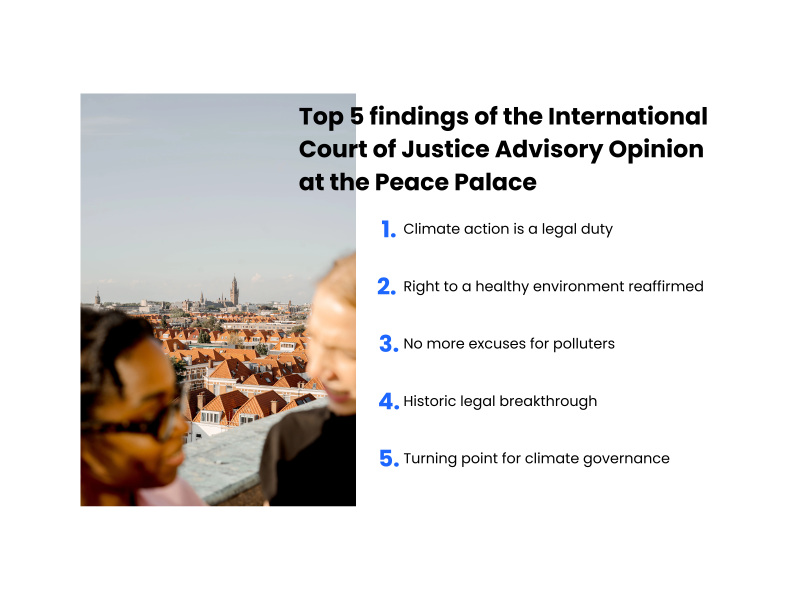
On July 23, 2025, the International Court of Justice issued its long-awaited advisory opinion on the obligations of states regarding climate change. It makes clear that states and major polluters have a duty to protect people and take effective measures to protect the climate system.
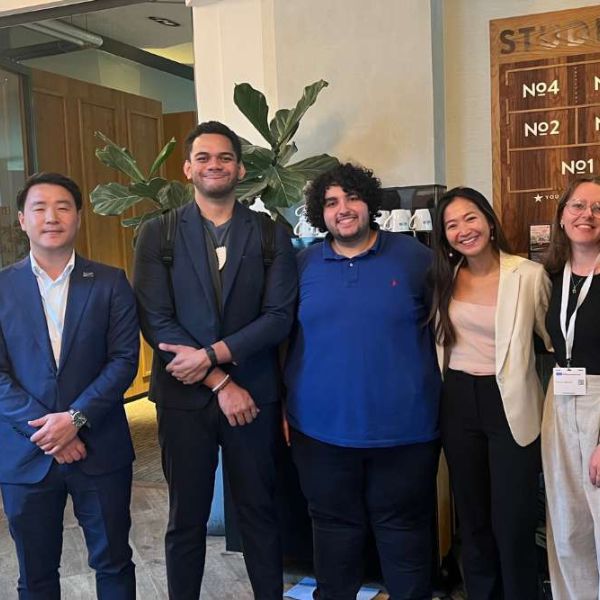
We were there and spoke with three pioneers from World's Youth for Climate Justice: Jule Schnakenberg, Co-Founder; Nicole Ponce, Global Advocacy Lead; and Samira Ben Ali, Global Campaigns Lead.
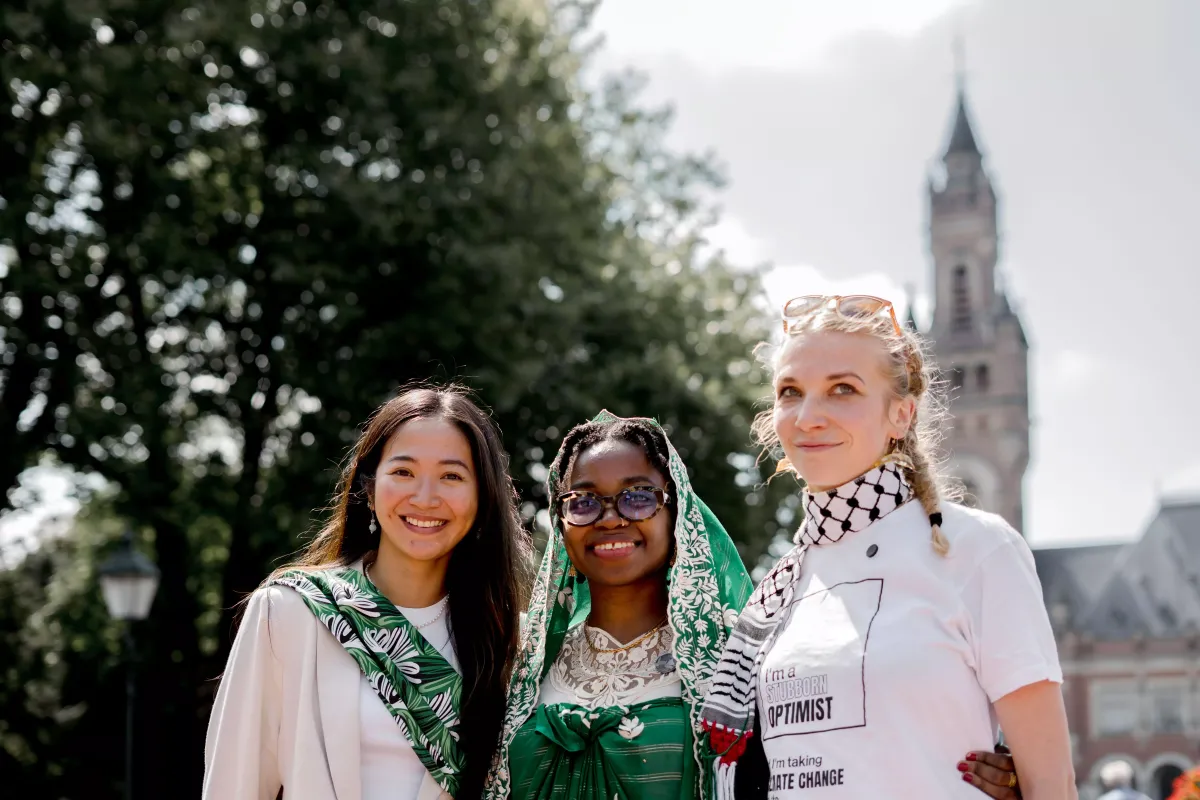
From lef to right: Nicole Ponce, Samira Ben Ali en Jule Schnakenberg
This historic ruling is a turning point for frontline communities around the world. We couldn't have gotten here without the work of Pacific Islands Students Fighting Climate Change (PISFCC) and World's Youth for Climate Justice (WYCJ).
Text and photography by Sacha Celine Verheij
What a long journey this has been. After six years of campaigning, the International Court of Justice has issued its Advisory Opinion. How are you feeling?
Overwhelmed with joy, gratitude and more determination than ever to make this count. This moment shows how youth and Global South communities have the power to shape international law and seek reparation for damage done.
"It was bold. It was ambitious. But we believed in it. We organised, we mobilised, we lobbied. And after years of campaigning, we won."
You worked so long towards this ICJ ruling. Did you expect this outcome?
Our public answer has always been that we are stubborn optimists. However, my honest answer is that the Court's reponses were much stronger than we realistically expected. It was bold. It was ambitious. But we believed in it. We organised, we mobilised, we lobbied. And after years of campaigning, we won.
The groundbreaking advisory opinion, drafted in 2019 by law students from the University of the South Pacific, inspired young people worldwide to demand state support for the UN request and meaningful participation in the Court's proceedings. Through the campaign, Pacific Islands Students Fighting Climate Change (PISFCC) and World's Youth for Climate Justice (WYCJ) united more than 1,500 organizations and secured the UN's acceptance of the advisory opinion. After six years of campaigning, the International Court of Justice issued the advisory opinion on July 23, 2025.
What does this ICJ ruling mean?
In very short, it means that the court rules that state's legal obligations are binding, that they have to do more to protect from the adverse effects of climate change. The Court also said that if they don't regulate emissions,a nd continue to grant new fossil fuel licenses for example, they can be held liable and reparations may be due.
This sounds technical, but in its essence the Court recognized historical responsibility for emissions, the human rights impact of these emissions and opened the door for stronger international cooperation on climate change in UNFCCC negotiations, on a national level and in litigation.
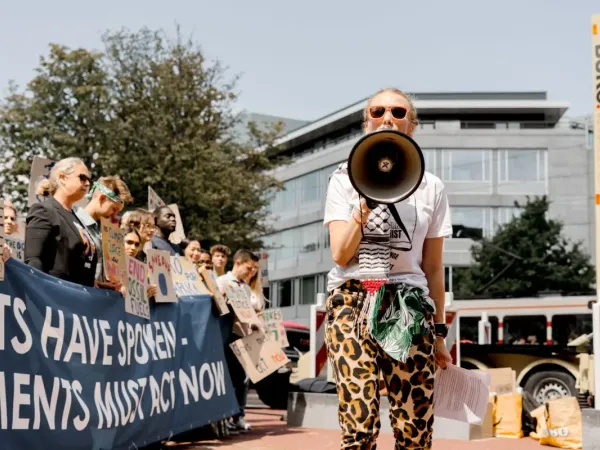
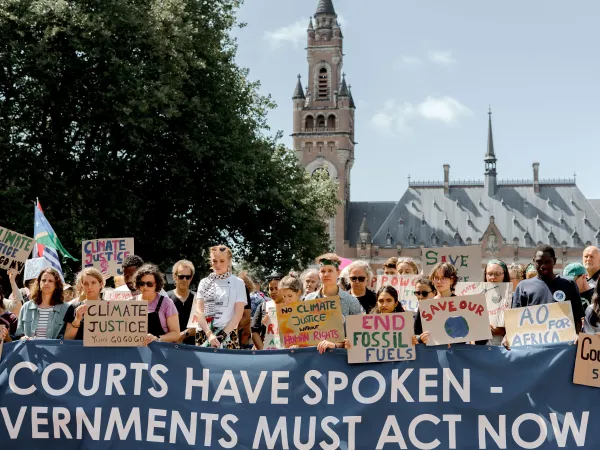
"In its essence the Court recognized historical responsibility for emissions, the human rights impact of these emissions and opened the door for stronger international cooperation on climate change."
How can we get more involvement from youth?
Youth is already involved, the question in our mind should be - how can we better support young people? This means, funding young people to do this work. Believing in them, listening to young people and their big dreams and them supporting them in any of the necessary and meaningful ways.
How do you keep going?
The responsibility that rests on our shoulders as the final generation to turn things around. And friends and mentors can really help to celebrate with you, think along with and support young people along the way.